So… if you’ve only watched blacksmithing on television, you could be forgiven for thinking the job is mostly constant whacking at metal.
The hammering is the part that makes it into the show. The time spent standing beside the forge while the metal heats tends to disappear between cuts. You see the piece go into the fire, then it’s back on the anvil and somebody is hitting it again. Convenient for television. A little misleading about how long the work actually takes.
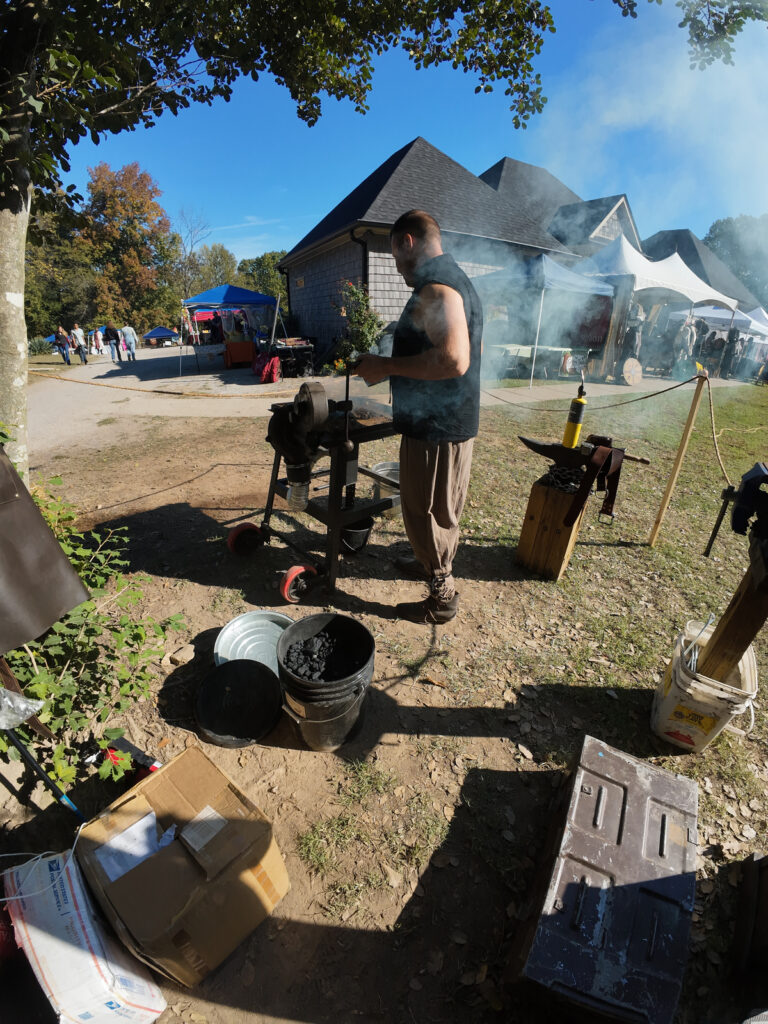
At Middle Earth in Middle Tennessee, people could watch that time pass for themselves. They saw the working, but they also saw the waiting. Once they stayed for a while, they started to get a better idea of the patience involved.
That’s one of the things I like about people seeing the process in person. I can explain that forging takes time, but watching the same piece go through the work gives that explanation something solid to attach to. There isn’t an editor standing beside the booth to skip the quiet parts.
Some people watched for a while, walked away, then came back to see how much had changed. They were interested in the progress even when they had already seen me working earlier. That gave them a different way to follow it: the piece they remembered from their last visit, and the piece in front of them now.
I don’t mind showing the waiting. It’s part of the job, and it helps people understand what they’re watching when the hammer starts moving again.
Television can keep the quick cuts. If you stand beside my forge long enough, you’ll get the unedited version.