Hey friends… one conversation kept coming up at Middle Earth in Middle Tennessee.
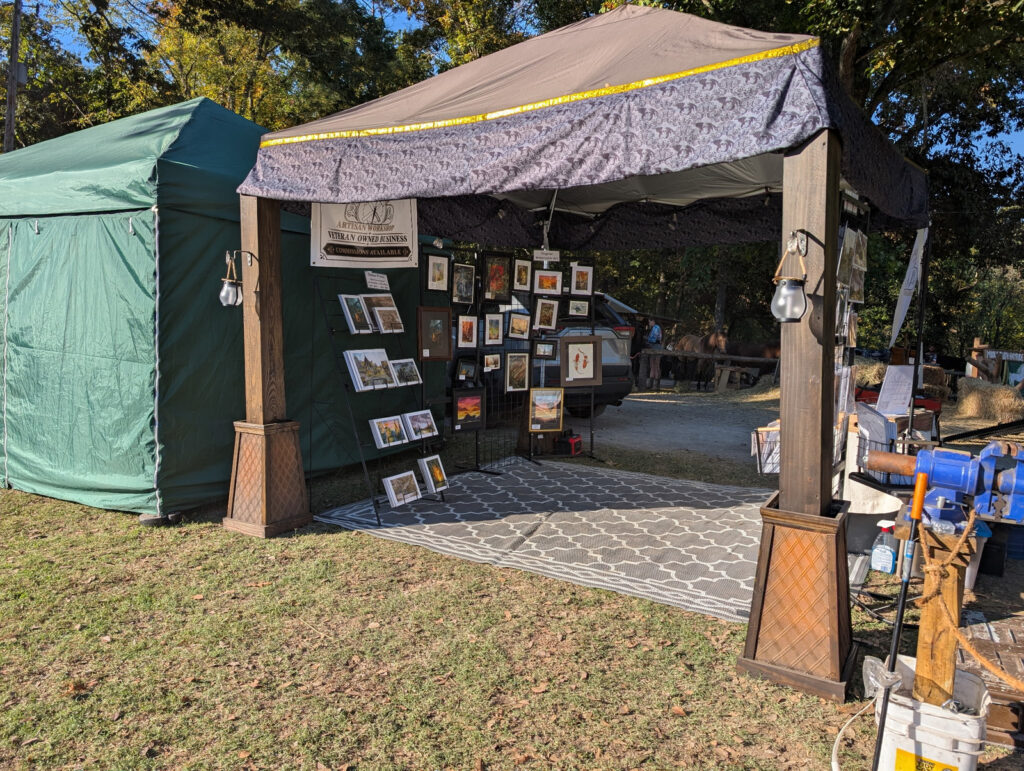
People would see me working as a smith and assume somebody else had painted everything in the booth. Often they figured Stephanie was the painter and I was the smith. She would patiently explain that both kinds of work were mine.
I can understand how people arrive at that division. There’s somebody at the anvil, there are paintings on display, and there’s another person helping in the booth. It looks like a reasonable way to split the work. It just happens to be the wrong split in this case.
The paintings and the forged objects are both things I make. Having them together gives people a chance to see that without visiting two different places, although apparently a little explanation still helps.
What I particularly enjoyed was how often people returned. They’d watch me work, go do something else, then come back to see what had changed. Some stayed and hung out for a while. Seeing the process once didn’t necessarily satisfy their curiosity; they wanted to check on the progress.
That made the booth a good place for a conversation about the work. Somebody could look at a painting, watch the smithing, then come back with another question. The displays and the working area gave them different things to notice.
There’s no need to make the two disciplines sound identical. A painting is a painting, and a forged tool has its own job. I enjoy making both, and I’m happy to have room for both in the same workshop.
So if you’ve stopped at the booth and wondered which one of us paints: that would be me, too. Stephanie has had plenty of practice explaining it.