There is a strange idea that making something is only worthwhile if the result is good.
I do not believe that.
I have spent years learning how to paint, forge, build displays, make tools, and generally follow whatever thought causes me to say, “I could make that.” Sometimes the result is useful. Sometimes it is beautiful. Sometimes it becomes the thing I hoped it would be. Sometimes it is terrible.
The terrible things still count.
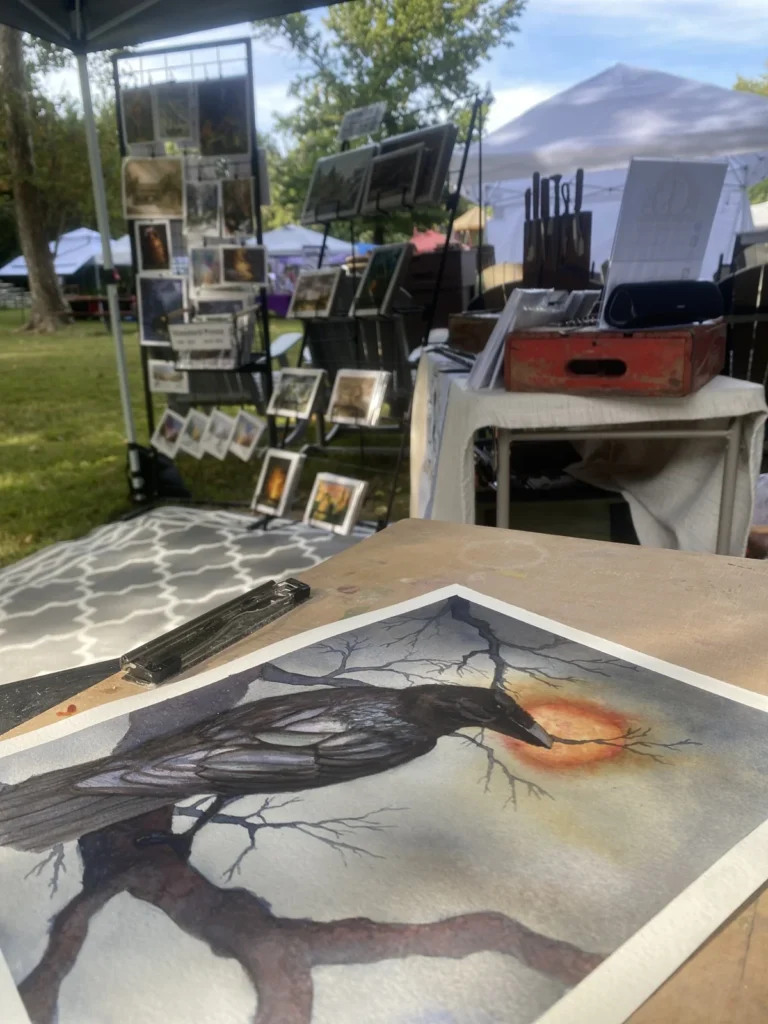
Over the last month I have been thinking about where and how people encounter art. A booth is not simply a place where objects sit with prices attached. Art requires visiting, talking, and connection. People stop because something catches their eye, but the conversation often becomes larger than the object. They ask how it was made. They tell me what it reminds them of. They explain why they have always wanted to try painting or why they used to draw before life crowded it out.
I have made unexpected connections with men and veterans through the work and through creative outlets. Many of them do not arrive thinking of themselves as artists. That label can feel like a test they have not passed. It suggests training, talent, finished work, and an audience waiting to judge the result.
Making does not need to begin there.
A person can pick up a brush, a hammer, a block of wood, or whatever else is available and simply find out what happens. They can make things—terrible things—and still have a blast. The process has value even if the product does not.
That value is not imaginary. The process asks you to pay attention. It gives your hands something real to do. It presents a series of small problems that can be solved one at a time. It allows a person to be curious without needing to be correct. Sometimes it creates room for a conversation that would not have happened otherwise.
The finished object may still matter. I care deeply about making things well. A good object has weight, balance, usefulness, and a feeling that it wants to do its job. A painting should hold together well enough to reward a second look. Craftsmanship is real, and learning it takes time.
But craftsmanship is not the price of admission.
Being bad at something is often the first honest stage of learning it. Not every experiment needs to become inventory. Not every sketch needs to be framed. Not every forged shape needs to survive. Some objects exist mainly to teach your hands what the next one requires.
That is not waste. That is practice, curiosity, and time spent doing something human.
Make the thing. Let it be awkward. Learn what it has to teach. If it turns out well, keep it. If it does not, you still made something—and you may have had a pretty good time doing it.