A soldier’s life can be read through objects.
Some are issued. Some are required. Some are carried because the job demands it. Others are small personal things that make the field a little more human. Their value may not make sense to anyone who did not carry them, but that is true of many important objects.
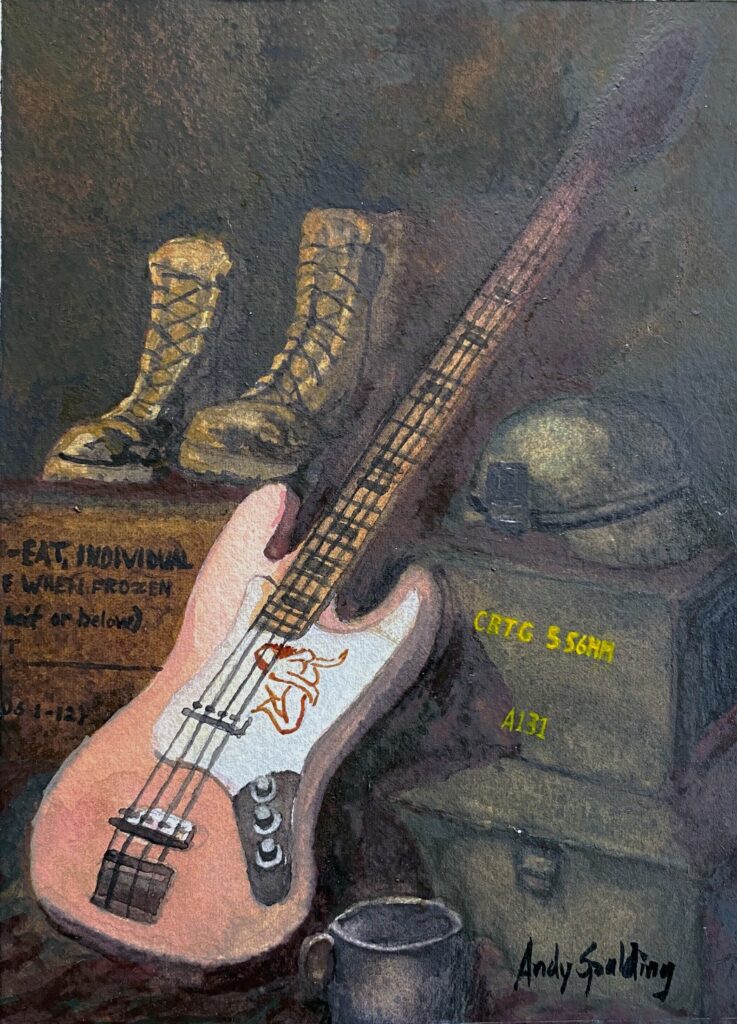
Pickin on a Soldier’s Heart began with that idea.
I wanted the still life to speak about soldiers’ lives through the objects they carry: military boots, a helmet, a pack, a cup, and the personal comfort items that travel with them. I also included a bass guitar. It represents a different group of objects—the ones waiting for a soldier to return home, put down the gear, and relax.
The guitar does not belong in the field in the same way the military equipment does. That is the point.
One collection of objects speaks to duty, movement, fatigue, and the practical needs of getting through the day. The other points toward the person outside the uniform. It belongs to music, quiet, identity, and the familiar life waiting somewhere else.
An object can be ordinary until experience gives it weight.
A cup is only a cup until it is the one you used every morning in a place you did not want to be. A hat is just a hat, but I have a favorite one anyway. A tool matters because of how it feels in the hand and because of the work it has done. A landscape means little until it is the view you grew up with, the place where you watched the sun go down, or the terrain that fixes a particular memory in your mind.
We assign meaning to the things around us because we are the ones living with them.
Military service makes that especially visible. What a person carries has to earn its place. Space and weight matter. Small comforts become important because there are fewer of them. The objects waiting at home gather meaning from absence. They represent routines, relationships, and parts of yourself that have been set aside but not lost.
That was the connection I wanted in the painting. The bass guitar and the military gear are not opposites. They belong to the same life.
This is also why I keep returning to objects in my work. Tools, blades, hats, buildings, equipment, and personal belongings all become physical connections to meaning. Most of the manufactured objects around us are designed to be replaceable and forgettable. The things we choose to carry—or wait to return to—rarely feel that simple.
Pickin on a Soldier’s Heart is a still life, but it is also a portrait without a person in it. The person is present through the things that mattered enough to carry and the things that mattered enough to come home to.